
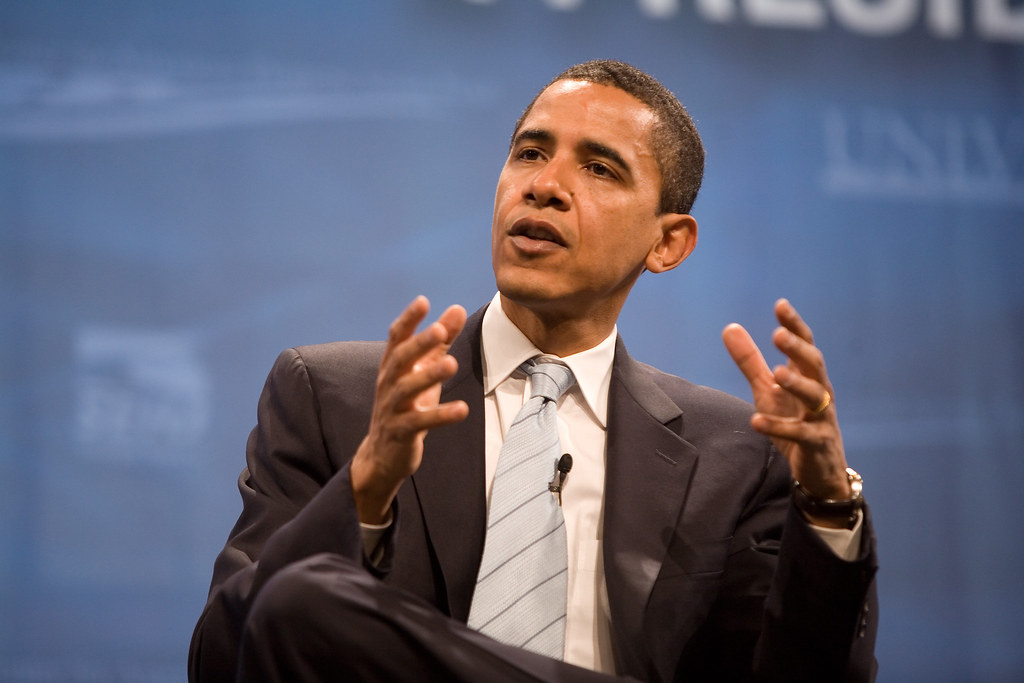
On the morning of June 19, 2026 — Juneteenth, the federal holiday commemorating the final emancipation of enslaved Americans at the close of the Civil War — the Obama Presidential Center opened its doors on Chicago's South Side. The ceremony featured land acknowledgments, celebrity guests, former heads of state, and at least one prominent governor who reportedly "literally teared up" during his private tour. The monument cost $850 million to complete.
According to reporting from the previous evening, a number of Black-owned subcontracting firms claim they are owed millions of dollars for construction work they performed and have not been paid for.
A more instructive pairing of facts would be difficult to contrive.
Thucydides, writing in the fifth century before Christ, observed that the Periclean building program — the magnificent temples of the Athenian Acropolis, including the Parthenon itself — was funded substantially through the Delian League treasury: money contributed by allied Greek city-states for their common defense. The monuments were undeniably beautiful. Their construction was, in the language of our own era, ethically complicated. The allied cities paid; Athens built; Pericles took credit. Thucydides did not moralize about this at length. He simply recorded it, understanding that his readers would draw the appropriate conclusion about the relationship between proclaimed virtue and practiced governance.
We would do well to follow his example this Juneteenth.
The Obama Presidential Center was conceived as a monument to community. Its location on the South Side of Chicago was deliberate — a return to the neighborhoods that shaped the 44th president, a statement of investment in Black Chicago, a symbolic rebuttal to critics who argued that his eight years in office left urban communities materially unchanged. The center's educational programming, its public spaces, its resonance with the history of Juneteenth — all of it was designed to embody a certain vision of progressive governance at its most aspirational.
And now the Black contractors who built it are reportedly waiting for their checks.
Alexis de Tocqueville, who understood American democracy more clearly than most Americans of his own generation, warned in Democracy in America that the peculiar temptation of democratic societies is not the tyranny of kings but the tyranny of sentiment — the substitution of correctly performed feeling for correctly practiced virtue. A nobleman might oppress his serfs while knowing, at some level, that he was oppressing them. A democratic citizen can do the same while genuinely believing he is performing righteousness. The democratic form enables and even encourages the conflation of the gesture with the deed.
What is a land acknowledgment if not this conflation in its purest form?
The opening ceremony for the Obama Presidential Center reportedly began with one — the ritual in which a speaker notes that the gathering occupies land originally inhabited by Indigenous peoples, expresses respect for that historical fact, and then proceeds with the event as planned. The practice is now near-universal in progressive institutional settings. It costs nothing. It changes nothing. It offends no one whose approval the speakers depend upon. It is performed virtue at its most distilled: maximum symbolic weight, minimum material consequence.
Meanwhile, somewhere in Chicago, Black subcontractors are calculating what they are owed.
The Founders — invoked here not as infallible demigods but as serious moral thinkers who grappled honestly with questions of justice and self-governance — built a republic on the premise that virtue must be practiced, not merely performed. Benjamin Franklin's famous self-improvement regimen, the daily examination of conscience set out in his Autobiography, was not a guide to correct signaling. It was a guide to correct action, repeated until it became habitual. Character, in the classical tradition the Founders inherited from Aristotle through the English common law, is not what you believe. It is what you do, consistently, when it costs you something.
The question the Obama Center's opening raises is not whether the former president means well. The question is whether the progressive project he embodies has severed the thread between meaning well and doing well — between the aesthetics of justice and its substance.
Juneteenth is worth reflecting on in this context. The emancipation it commemorates was not achieved by ceremony. It was achieved by the willingness of the Union Army to march, to fight, to die in staggering numbers — and ultimately by Abraham Lincoln's willingness to subordinate every other political consideration to the preservation of the republic and the destruction of slavery. That willingness cost him his life. It cost the nation 620,000 dead. The permanent thing that Juneteenth should call us to remember is not that liberation is beautiful — though it is — but that it is expensive. That virtue, real virtue, costs something real.
This is the moral inheritance of the Judeo-Christian West: not that man is naturally good but that goodness requires discipline, sacrifice, and accountability — to God, to neighbor, to the community whose trust you claim. The Federalist Papers do not assume virtuous leaders. They build a system of checks precisely because they do not. What no constitutional architecture can prevent, however, is the sustained erosion of the moral seriousness that makes the architecture meaningful. That erosion happens not through sudden tyranny but through accumulated performance — through the slow substitution of the gesture for the deed, the ceremony for the sacrifice, the land acknowledgment for the paid contractor.
Thucydides recorded the fall of Athens without melodrama. He noted the sequence of decisions, the accumulating contradictions, the growing distance between Athenian rhetoric and Athenian conduct — and left the conclusion to the reader.
The Obama Presidential Center opened today on Juneteenth.
The contractors are waiting.
The reader may draw the appropriate conclusion.

Get the Exclusive
10.21.2026