

Thucydides, in his account of the Melian Dialogue, gave Western civilization one of its most unsparing lessons in the grammar of power. The Athenians had come to the island of Melos with a simple proposition: submit, or be destroyed. When the Melians appealed to justice — to their neutrality, to the protection of the gods, to the goodwill of Sparta — the Athenians replied with the cold precision of men who had studied history rather than merely sentimentalized it. The strong do what they can, they said, and the weak suffer what they must.
The lesson Thucydides drew was not that might makes right. It was something more precise and more tragic: that republics which project weakness invite catastrophe — not only upon themselves, but upon the very populations they hope to spare through restraint. The Melians died not despite Athenian hesitation, but because Athenian credibility had been misread. The price of ambiguity was paid in blood.
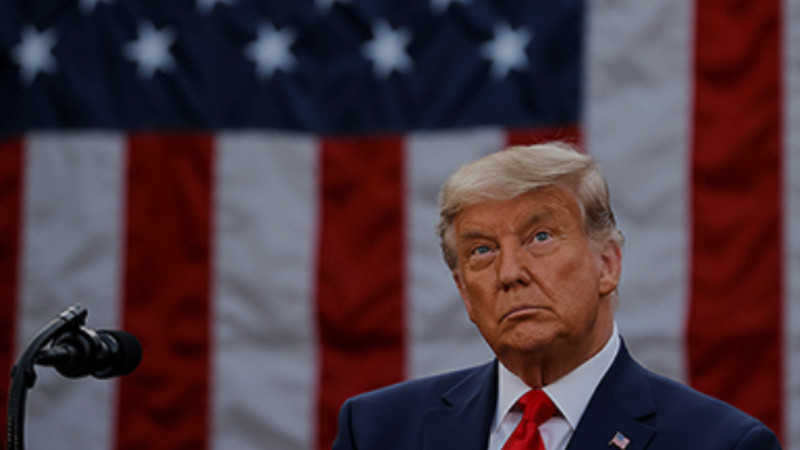
This week, President Trump extended his ultimatum to Iran. The president had set a deadline demanding that Tehran fully reopen the Strait of Hormuz, threatening — in his characteristically direct formulation — to obliterate Iran's power plants if the regime did not comply. The deadline passed. The extension was announced. Negotiations, the White House suggested, were underway. An off-ramp appeared to be in view.
Conservative commentators are divided. Some see in the pause a strategic masterstroke — the "doctrine of unpredictability" by which an adversary's uncertainty about American restraint is itself a form of deterrence. Others see a miscalculation: a president who issued an ultimatum and then stepped back from it, buying time without resolving the underlying constraint, ceding credibility in the very moment when it was most needed. The Washington Examiner wrote plainly this week that Trump was "facing a bad choice of his own making," having maneuvered himself to a point where escalation carried catastrophic risk and accommodation carried strategic cost.
Both camps are asking the right questions. But they may be asking them at the wrong level of analysis. The strategic question is not simply whether a particular deadline was enforced. It is whether the United States, in this civilizational moment, retains the psychological and institutional posture that makes deterrence possible at all.
Tocqueville observed, in a passage that has aged with unsettling precision, that democratic nations face a peculiar vulnerability in foreign affairs. Oriented toward commerce, toward domestic happiness, toward the rhythms of electoral cycles, they are constitutionally ill-suited to the long patience that strategic credibility demands. They oscillate — between extravagant belligerence and sudden accommodation — because their political attention spans are shorter than the time horizons of their adversaries. They threaten, then hesitate, then negotiate, then congratulate themselves on having avoided war, and then find themselves at the same impasse on worse terms.
The Islamic Republic of Iran has governed according to this diagnosis for more than four decades. Its leaders have watched the oscillations with patient contempt. They survived Carter's accommodation, Reagan's genuine deterrence — the only period in which the regime genuinely modified its behavior — Clinton's benign neglect, Bush's distraction in Iraq, Obama's extraordinary act of strategic generosity, and Trump's first-term maximum pressure campaign. Each cycle has taught the same lesson: American resolve is a renewable resource with a predictable expiration date. The Strait, closed or threatened, is leverage. And leverage, held long enough, yields concessions.
Whether this calculation holds now depends on something deeper than presidential temperament.
Hamilton's argument in Federalist No. 70 — that "energy in the executive" is not contrary to republican liberty but is its prerequisite — was not merely a constitutional position. It was a theory of republican survival. A republic that cannot act decisively when decisiveness is required does not remain a republic in any meaningful sense; it becomes a deliberative assembly that deliberates until it is overtaken by events. The capacity for swift and sustained action in the face of external threat is not a departure from the Founders' vision. It is what the Founders designed for, precisely because they had read Thucydides.
The IDF struck Iranian senior officials' headquarters in airstrikes this week — a reminder that the region's most capable military is not waiting for American diplomatic rhythms to resolve the conflict. Israeli Prime Minister Netanyahu indicated that a potential deal under discussion would protect Israel's vital interests. The parties are moving. The question is whether American leadership will shape the outcome or ratify it after the fact.
The doctrine of unpredictability has genuine strategic roots. Nixon and Kissinger deployed it deliberately — the "madman theory" in which an adversary's uncertainty about the limits of American action was itself a deterrent. The logic is coherent: if Tehran cannot calculate whether escalation will bring restraint or obliteration, it must price in the worst case. Uncertainty can move negotiations more effectively than calibrated pressure.
But unpredictability deters only when it is underlaid by demonstrated capacity and will. The madman theory functions only if the madman has, at some point, actually done the thing he threatened — or if the adversary believes, on the basis of evidence, that he will. Nixon's unpredictability was credible partly because it operated in the shadow of actual American military power applied at scale. An unpredictability that has never been tested is simply inconsistency dressed in strategic language.
What this moment demands is what Thucydides and Hamilton, separated by twenty-two centuries, would have recognized as the same thing: a republic must be capable of bearing the full cost of its commitments. The Strait of Hormuz carries approximately twenty percent of the world's oil supply. Its closure is not a negotiating inconvenience. It is an act of economic warfare against the Western order, executed by a theocratic regime that has spent forty-five years announcing its intentions and been rewarded, repeatedly, for its patience.
History offers no clean endings here. The Athenians destroyed Melos and went on to catastrophic defeat in Sicily. Power applied without wisdom does not redeem itself. The civilizational stakes of this moment are not simply whether Iran reopens a waterway. They are whether the republic — this republic, now — still possesses the character to defend its own interests, which has always been the precondition for defending anything else.
The permanent things do not negotiate. They endure, or they are abandoned. And the record of civilizations that abandoned them, thinking they had found a more comfortable arrangement, is not an encouraging one.