

The House of Representatives delayed a scheduled vote Wednesday on the renewal of foreign surveillance authorities after a bloc of Republican members objected to provisions that allow intelligence agencies to collect communications data without a warrant, according to congressional sources.
The legislation would extend powers used to monitor foreign targets through American communications systems—authorities that intelligence officials describe as among the most productive tools available for tracking foreign adversaries, including operatives linked to China and Iran.
House Speaker Mike Johnson had pushed for the vote. He now faces a narrow path to passage without Democratic support, a prospect that Republican leadership has sought to avoid on legislation this politically sensitive.
The standoff carries particular weight given the political history of the authority in question. The foreign surveillance powers up for renewal were among the tools employed during the Russia investigation of the Trump first term to gather information touching on Trump associates and allies. Abuses documented in subsequent inspector general and special counsel reviews showed the authority had been applied with insufficient oversight, generating warrantless collection that swept in communications connected to American citizens.
That record has not been forgotten by the conservatives now blocking the vote.
Several members of the House Freedom Caucus and affiliated privacy-focused Republicans have cited the documented abuses of the surveillance apparatus during the Trump-Russia investigation as grounds for either significant reform or outright refusal to renew the authority without structural changes.
The White House, however, has signaled a different calculation.
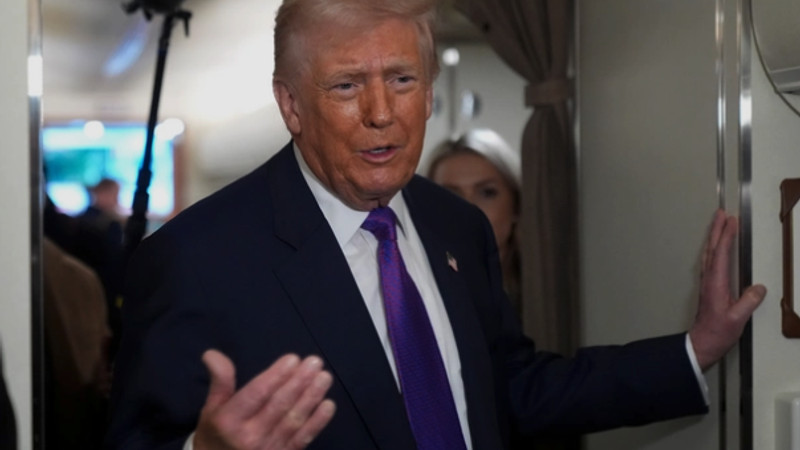
President Trump, according to reporting Wednesday, indicated support for preserving the surveillance authorities, siding with current intelligence community leadership in arguing that the powers are essential to monitoring foreign adversaries. The administration's posture—backing an authority that was used to monitor communications linked to Trump's own political operation during his first term—drew pointed commentary from conservatives who view renewal as a concession to the same institutional apparatus Trump once accused of targeting him politically.
The authorities permit intelligence agencies to collect electronic communications of foreign targets located outside the United States. Critics, including a growing number of Republican members, argue the collection inevitably captures the communications of American citizens without warrants, in what they contend is a violation of Fourth Amendment protections against unreasonable search and seizure.
Proponents of renewal—including current intelligence community leadership and the Trump administration—argue that reforms already enacted provide sufficient oversight and that allowing the authority to lapse would create gaps in America's ability to monitor foreign adversaries in real time.
The House Intelligence Committee had been expected to bring the legislation to the floor this week. That timeline is now in question following what one congressional aide described as significant opposition from within the Republican conference.
No final vote count has been publicly released as of Wednesday afternoon. House Republican leadership has not announced a new vote date.
The dynamic reflects a broader tension within the Republican coalition between national security institutionalists who argue the intelligence authorities are indispensable and a libertarian-leaning faction that views unchecked surveillance power as incompatible with constitutional governance regardless of which administration controls it.
The outcome carries implications beyond the immediate vote. If Johnson is forced to rely on Democratic votes to pass the renewal, it would mark a significant political cost in a conference where dependence on Democrats for national security legislation has become increasingly controversial. If the authority is allowed to lapse, it would mark a significant break from the post-September 11 expansion of intelligence powers that has been renewed by each successive administration.
Negotiations between leadership and dissenting members were continuing as of Wednesday afternoon. No compromise proposal had been made public.
The next step in the process depends on whether Republican leadership can assemble the votes within its own conference—or chooses to seek Democratic support over the objections of its own members.