The Heritage Foundation calls it the “tool of choice for vote thieves.” The convenient, innovative, and beloved mail-in ballot has been a source of contention due to its vulnerability to manipulation.
During the 2018 midterms, Democrats in California and a Republican consultant in North Carolina used a process called "ballot harvesting" to collect mail-in ballots for voters.
But there was a big difference between the two states, as I discuss in my new book, "Power Grab." In North Carolina, ballot harvesting is illegal. Congress refused to seat the winner of the 2018 midterm election between Republican Mark Harris and Democrat Dan McCready and a special election was held this month to replace him. Though Republican Dan Bishop managed to win the heavily Republican district last week, the history of "cheating" by the previous candidate weighed heavily, making the race far closer than one might expect in a district with an R+8 partisan lean.
In California, by contrast, ballot harvesting was legalized by Democrats in the state legislature. They don't consider it cheating in that state. It was used to flip seven Republican seats to the Democratic column in 2018.
Democrats have long dismissed claims that mail-in ballots are vulnerable to manipulation, pointing to what they call a dearth of voter fraud convictions. Nonetheless, they could hardly ignore the North Carolina race in which a Republican campaign operative illegally collecting ballots allegedly destroyed as many as a thousand ballots supporting the Democratic candidate.
Read More...
Stealing the 2020 Election: Ballot harvesting -- California's model
Current News
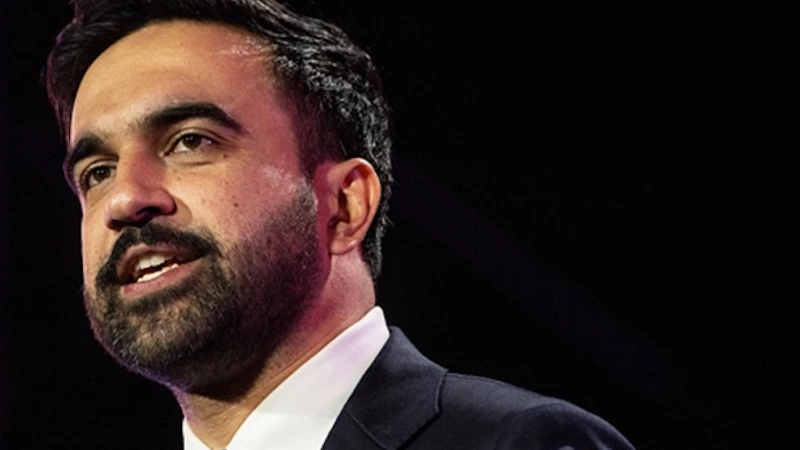
The Man Running America’s Biggest City Just Threatened to Arrest an Israeli PM. Let That Sink In.
Zohran Mamdani, who took office as New York City’s mayor earlier this year, told reporters he was in “active conversation” with the city’s Law Department about whether to arrest Benjamin Netanyahu if the Israeli prime minister sets foot in New York. No federal charges. Read more

The Vandals Are Here, and They Came From Within
A recent Gallup survey found American pride at a record low. Not a polling artifact, not a margin-of-error quirk — a historic nadir in the percentage of Americans who describe themselves as “extremely proud” of their country. Read more
Degrees Without Merit: How the Long March Through Institutions Is Producing Frauds in Lab Coats
Trump Told You Iran Doesn’t Keep Deals. The Burning Tankers Prove It

Pentagon-DOJ Task Force to Hunt and Prosecute National Security Leakers ‘With the Full Force of the Law’
Defense Secretary Pete Hegseth announced Monday that the Pentagon has established a joint task force with the Department of Justice to identify and criminally prosecute government officials who leak sensitive national security information to journalists, according to a statement from the Defense Department. Read more

Fire on the Water: Thucydides, the Hormuz Strait, and America’s Test of Will
Thucydides, writing of the protracted struggle between Athens and Sparta in the fifth century before Christ, observed that nations go to war not for the stated reasons of justice or grievance, but because of fear, honor, and interest — Read more