President Trump’s top immigration spokesman on Wednesday said that there are potentially 22 million illegal immigrants inside the United States, nearly twice the estimate regularly cited.
Ken Cuccinelli, the acting director of U.S. Citizenship and Immigration Services, which handles the legal immigration process, said the number comes from a study done by the Massachusetts Institute of Technology. That study put the number at 22.1 million.
The number typically cited is 11 million to 13 million illegal immigrants in the country. The latest estimate, from the Federation for American Immigration Reform, is 14 million. An accurate count is difficult to calculate.
But Cuccinelli, who is on the shortlist to lead the Department of Homeland Security, said that for policy purposes it is better to work around the larger potential number than be blind to how big the crisis could actually be.
“I was just quoting the MIT study,” he told Secrets after speaking at a Christian Science Monitornewsmaker breakfast.
“That’s the one I know. I just use it as a reference point. Because from an operational standpoint, it doesn’t matter too much. We deal with what’s in front of us. So that’s the perspective that I bring to it. It’s useful to know. It’s an important thing at a 100,000-foot level,” he said.
He raised the 22 million number while discussing the potential fate of some 800,000 student-age illegal immigrants Democrats in Congress want to grant amnesty to. They are referred to as DACA, for the Obama-era program and put off deportation under “deferred action for childhood arrivals.”
Read More...
22 million illegal immigrants, nearly twice previous tally
Current News
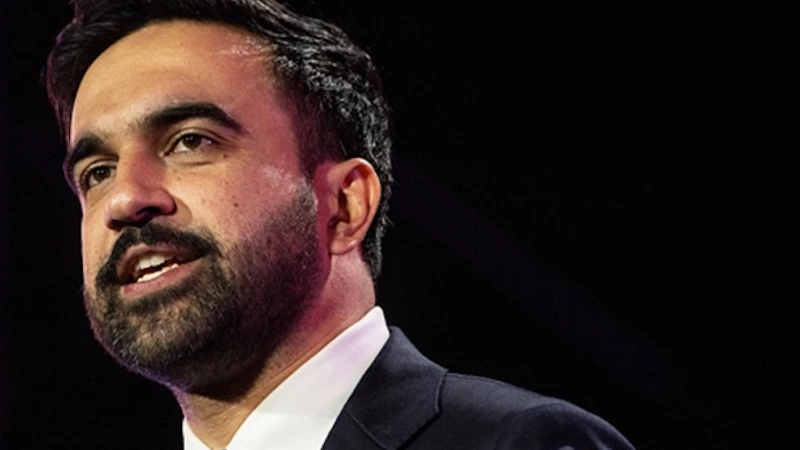
The Man Running America’s Biggest City Just Threatened to Arrest an Israeli PM. Let That Sink In.
Zohran Mamdani, who took office as New York City’s mayor earlier this year, told reporters he was in “active conversation” with the city’s Law Department about whether to arrest Benjamin Netanyahu if the Israeli prime minister sets foot in New York. No federal charges. Read more

The Vandals Are Here, and They Came From Within
A recent Gallup survey found American pride at a record low. Not a polling artifact, not a margin-of-error quirk — a historic nadir in the percentage of Americans who describe themselves as “extremely proud” of their country. Read more
Degrees Without Merit: How the Long March Through Institutions Is Producing Frauds in Lab Coats
Trump Told You Iran Doesn’t Keep Deals. The Burning Tankers Prove It
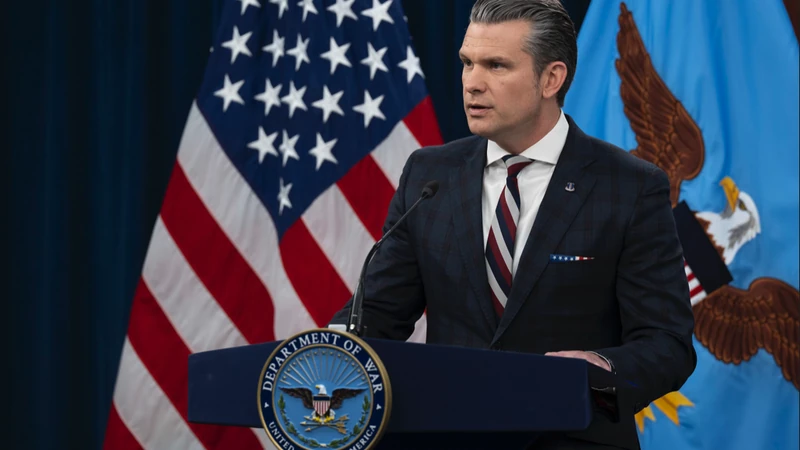
Pentagon-DOJ Task Force to Hunt and Prosecute National Security Leakers ‘With the Full Force of the Law’
Defense Secretary Pete Hegseth announced Monday that the Pentagon has established a joint task force with the Department of Justice to identify and criminally prosecute government officials who leak sensitive national security information to journalists, according to a statement from the Defense Department. Read more

Fire on the Water: Thucydides, the Hormuz Strait, and America’s Test of Will
Thucydides, writing of the protracted struggle between Athens and Sparta in the fifth century before Christ, observed that nations go to war not for the stated reasons of justice or grievance, but because of fear, honor, and interest — Read more