Sen. Rand Paul (R-Ky.) on Tuesday blocked for the second time on the Senate floor a resolution formally opposing President Trump's Syria strategy.
Senate Minority Leader Charles Schumer (D-N.Y.) tried to set up a vote on the House-passed resolution, which formally opposes Trump's decision to pull back U.S. troops from northern Syria and calls on Turkey to end its military incursion.
"What's the best way to get the president to act? Well, my friends, you know it. It's you. When Republican senators protest what the president has done, he sometimes acts," Schumer said from the Senate floor.
Under the Senate's rules, any one senator can request to vote on or pass a bill. But because that requires the signoff of every senator, any one lawmaker can block the request.
Paul, a libertarian-leaning GOP senator, argued that if Congress is going to take up a resolution opposing Trump's Syria decision, it needs to have a larger war powers debate.
"If Democrats want to send our young men and women to fight in the Syrian civil war, let's have that debate. By all means, let's have the constitutional debate today on the Senate floor right here, right now," Paul said.
The resolution — sponsored by Reps. Eliot Engel (D-N.Y.) and Michael McCaul (R-Texas) in the House, with a companion bill sponsored by Sens. Bob Menendez (D-N.J.) and Todd Young (R-Ind.) in the Senate — "opposes the decision to end certain United States efforts to prevent Turkish military operations against Syrian Kurdish forces in Northeast Syria."
It also calls on Turkey to end its military action, calls on the United States to protect the Kurds and calls on the White House "to present a clear and specific plan for the enduring defeat of ISIS."
It's the second time Paul has blocked the resolution from getting a vote. Schumer made the same request last week before the Kentucky Republican held it up.
Schumer argued on Tuesday that Paul's understanding of what requires a declaration of war is "different than 99.9 percent of America and from every other single person in this chamber."
Paul fired back that if the United States was trying to "create a Kurdish homeland ... hell yes we need a debate and a vote and authorization of force."
Read More...
Paul blocks vote on House-passed Syria resolution for second time
Current News
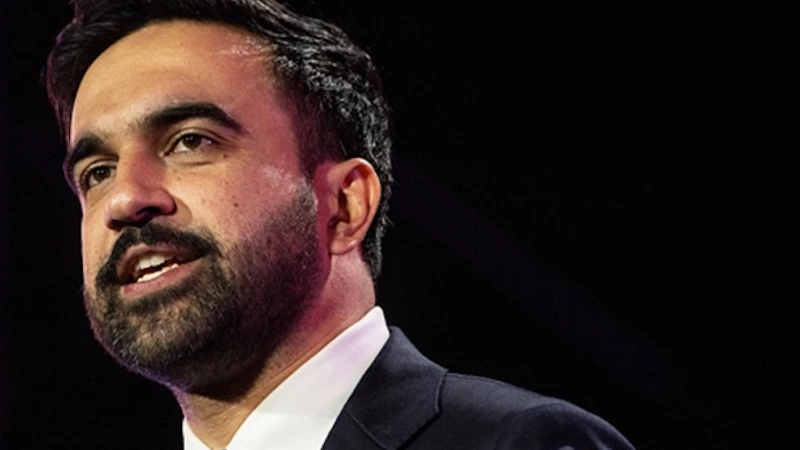
The Man Running America’s Biggest City Just Threatened to Arrest an Israeli PM. Let That Sink In.
Zohran Mamdani, who took office as New York City’s mayor earlier this year, told reporters he was in “active conversation” with the city’s Law Department about whether to arrest Benjamin Netanyahu if the Israeli prime minister sets foot in New York. No federal charges. Read more

The Vandals Are Here, and They Came From Within
A recent Gallup survey found American pride at a record low. Not a polling artifact, not a margin-of-error quirk — a historic nadir in the percentage of Americans who describe themselves as “extremely proud” of their country. Read more
Degrees Without Merit: How the Long March Through Institutions Is Producing Frauds in Lab Coats
Trump Told You Iran Doesn’t Keep Deals. The Burning Tankers Prove It
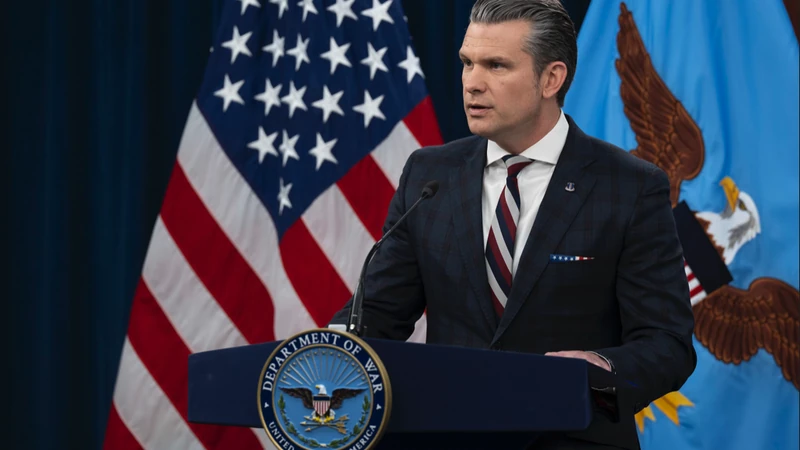
Pentagon-DOJ Task Force to Hunt and Prosecute National Security Leakers ‘With the Full Force of the Law’
Defense Secretary Pete Hegseth announced Monday that the Pentagon has established a joint task force with the Department of Justice to identify and criminally prosecute government officials who leak sensitive national security information to journalists, according to a statement from the Defense Department. Read more

Fire on the Water: Thucydides, the Hormuz Strait, and America’s Test of Will
Thucydides, writing of the protracted struggle between Athens and Sparta in the fifth century before Christ, observed that nations go to war not for the stated reasons of justice or grievance, but because of fear, honor, and interest — Read more