The people who have made an industry out of destroying ordinary people’s lives over old social media posts and out-of-context comments are very upset that it’s happening to them. The New York Times, clearly worried by the recent exposure of blatantly anti-Semitic tweets posted by one of its reporters, and clearly worried that even more embarrassing material is in reserve, tried to stop the hemorrhaging with a rambling article demonizing the independent journalists who uncovered the tweets.
In fact, much of the liberal media sphere went into panic mode, vehemently declaring that this particular exercise of the First Amendment is actually an attack on the First Amendment. The reason why liberal editors are so distraught that independent conservative journalists are publishing evidence of the racist, anti-Semitic, and otherwise vile sentiments expressed by their supposedly “objective” employees comes down — as it usually does — to power.
Many journalists are in the profession not to inform the public, but to gain the power to destroy people who question them — and they don’t like those tactics being turned against them. “[U]sing journalistic techniques to target journalists and news organizations ... is fundamentally different from the well-established role of the news media in scrutinizing people in positions of power,” the Times wrote in its article — which was of course labeled “news,” not “opinion.”
The newspaper’s publisher, Arthur Sulzberger, added that “the political operatives behind this campaign will argue that they are ‘reporting’ on news organizations in the same way that news organizations report on elected officials and other public figures,” but he roundly rejected that claim, insisting that his antagonists are trying to “manipulate the facts for political gain.”
To their credit, not everyone in the elite media world is buying it. Erik Wemple of The Washington Post and Jack Shafer of Politico both wrote rebukes of the Times’s indignation. Neither is a conservative “political operative,” but both found Sulzberger’s statement hypocritical and incongruent with the Times’s own reporting on this story. As Wemple put it, “For decades now, representatives of the mainstream media have answered conservative critiques by imploring: Judge us by the work we produce, not by the fact that more than 90 percent of us are liberal/Democratic. Mainstreamers cannot have it both ways.”
Considering that the Times recently held a staff meeting at which employees strategized over how best to undermine President Trump, Sulzberger doesn’t have much standing to complain about media bias. Clearly, he thinks that his journalists deserve special privileges and protections because the targets of their attacks are so important.
Yet, the media outlets The New York Times is painting as victims used out-of-context video clips to claim that a group of teenage boys from a Catholic high school in Kentucky engaged in a racist attack on an innocent Native American Vietnam veteran. The story was a complete lie — fabricated by left-wing activists and circulated by some of the country’s most “prestigious” newspapers. They did it because those teenagers wore MAGA hats — and in the sick, twisted minds of today’s liberal journalists, that makes them and their families legitimate targets.
CNN, which the Times also portrays as a victim, went after an obscure social media user for making a meme of the president wrestling a figure with CNN’s logo. The Daily Beast, another left-wing outlet, once doxxed a black forklift driver because he posted a meme about “drunk Nancy Pelosi.”
Read More...
Liberals haunted by social media tactics they use against the right
Current News
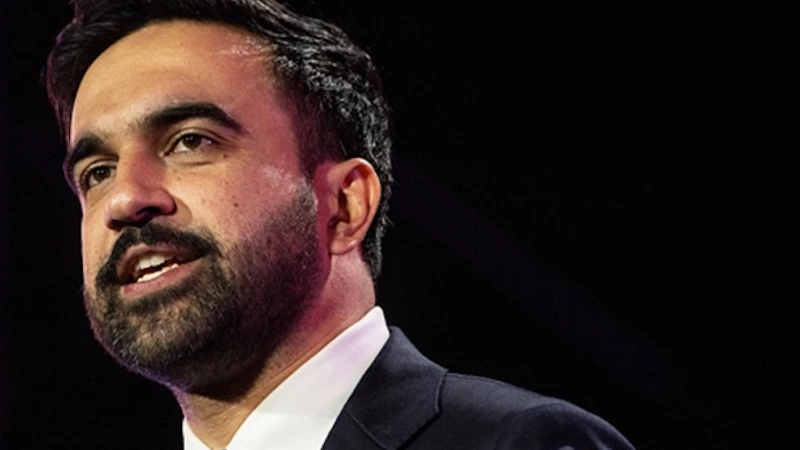
The Man Running America’s Biggest City Just Threatened to Arrest an Israeli PM. Let That Sink In.
Zohran Mamdani, who took office as New York City’s mayor earlier this year, told reporters he was in “active conversation” with the city’s Law Department about whether to arrest Benjamin Netanyahu if the Israeli prime minister sets foot in New York. No federal charges. Read more

The Vandals Are Here, and They Came From Within
A recent Gallup survey found American pride at a record low. Not a polling artifact, not a margin-of-error quirk — a historic nadir in the percentage of Americans who describe themselves as “extremely proud” of their country. Read more
Degrees Without Merit: How the Long March Through Institutions Is Producing Frauds in Lab Coats
Trump Told You Iran Doesn’t Keep Deals. The Burning Tankers Prove It
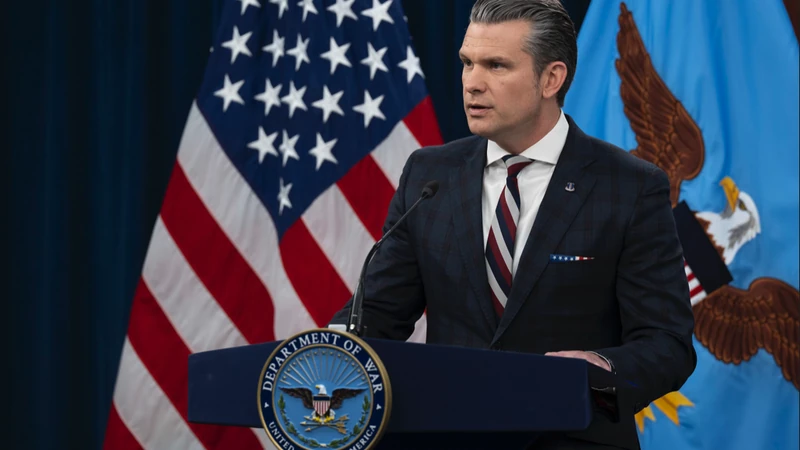
Pentagon-DOJ Task Force to Hunt and Prosecute National Security Leakers ‘With the Full Force of the Law’
Defense Secretary Pete Hegseth announced Monday that the Pentagon has established a joint task force with the Department of Justice to identify and criminally prosecute government officials who leak sensitive national security information to journalists, according to a statement from the Defense Department. Read more

Fire on the Water: Thucydides, the Hormuz Strait, and America’s Test of Will
Thucydides, writing of the protracted struggle between Athens and Sparta in the fifth century before Christ, observed that nations go to war not for the stated reasons of justice or grievance, but because of fear, honor, and interest — Read more