Some Democrats are putting up caution signs for Hillary Clinton as she wades back into presidential politics by casting 2020 candidate Tulsi Gabbard as a “Russian asset,” mocking President Donald Trump’s dealings with a foreign leader and drawing counterattacks from both.
Bernie Sanders, who lost the 2016 nomination to Clinton and is running again in 2020, took to Twitter with implicit criticisms of his erstwhile rival. “People can disagree on issues,” Sanders wrote Monday, “but it is outrageous for anyone to suggest that Tulsi is a foreign asset.”
Larry Cohen, one of Sanders’ top supporters, was more conciliatory but warned in an interview that Clinton could harm the eventual 2020 nominee by weighing in against specific candidates, even a longshot like Gabbard.
The former first lady, U.S. senator and secretary of state has “put a lifetime into the Democratic Party. She deserves to be heard,” said Cohen, a prominent member of the Democratic National Committee who also chairs Our Revolution, the spinoff of Sanders’ last presidential campaign. But “in this senior leader role she has,” Cohen said, “it’s her job to embrace the range of politics within the party and not polarize within it.”
Her scuffle with Gabbard and other recent headlines she’s driven demonstrate that the 71-year-old remains a political lightning rod, just as she’s been through much of the last three decades. The dynamics raise questions about how Clinton and her party can best leverage her strengths and navigate her weaknesses through next November.
For her part, aides say Clinton isn’t attempting any calculated play.
“The short of it is that she’s on a book tour and is feeling unconstrained about speaking her mind,” said Clinton spokesman Nick Merrill. “It’s easy to over-ascribe a strategy about every word she utters, but it’s as simple as that. She’s out there telling the truth.”
Yet the results can frustrate those trying to win the office that Clinton twice lost, a reality presidential hopeful Cory Booker observed with a carefully calibrated critique while he campaigned Monday in New Hampshire. “We need to focus on winning this election ... talking about the urgencies that we have before us and not indulging in what I think is, for me, not a relevant story,” Booker said, targeting the news media more than Clinton or Gabbard.
There’s no settled playbook for former nominees — or former presidents — in party politics.
Sitting senators like Democrat John Kerry and Republican John McCain returned quietly to Capitol Hill. Democrat Al Gore became a leading advocate for climate action. McCain’s running mate, Sarah Palin, has made perhaps the biggest recent splash as a conservative media sensation who helped stoke a base that ultimately embraced Trump.
But Clinton “is in her own category,” said Karen Finney, a top aide on her 2016 campaign.
The first woman to win a major party presidential nomination — and the national popular vote leader with almost 3 million more votes than Trump — Clinton remains a popular figure in her party, even after enduring criticism for losing key Midwestern states to Trump. For Republicans, she’s an evergreen foil, used currently in the Mississippi governor’s race, where Democratic nominee Jim Hood, a longtime attorney general, is being attacked for acknowledging he voted for her over Trump.
Read More...
Democrats’ 2020 race has a new shadow: Hillary Clinton
Current News
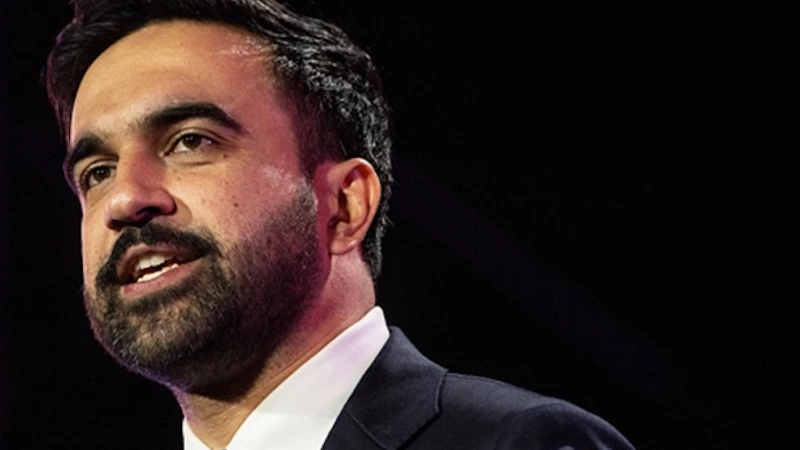
The Man Running America’s Biggest City Just Threatened to Arrest an Israeli PM. Let That Sink In.
Zohran Mamdani, who took office as New York City’s mayor earlier this year, told reporters he was in “active conversation” with the city’s Law Department about whether to arrest Benjamin Netanyahu if the Israeli prime minister sets foot in New York. No federal charges. Read more

The Vandals Are Here, and They Came From Within
A recent Gallup survey found American pride at a record low. Not a polling artifact, not a margin-of-error quirk — a historic nadir in the percentage of Americans who describe themselves as “extremely proud” of their country. Read more
Degrees Without Merit: How the Long March Through Institutions Is Producing Frauds in Lab Coats
Trump Told You Iran Doesn’t Keep Deals. The Burning Tankers Prove It
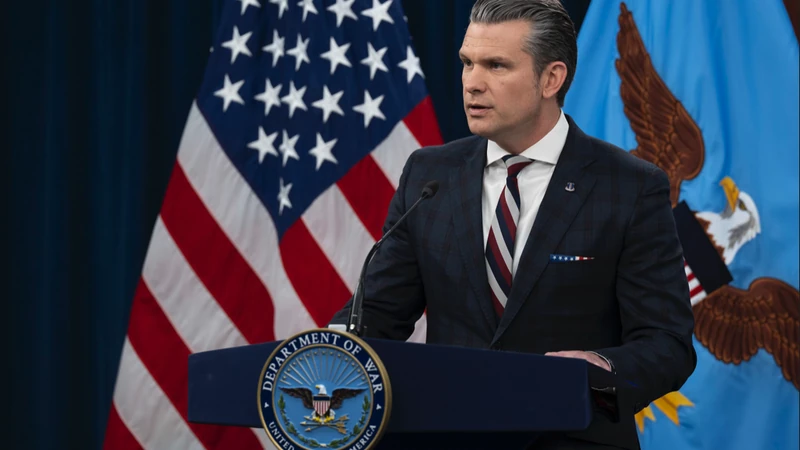
Pentagon-DOJ Task Force to Hunt and Prosecute National Security Leakers ‘With the Full Force of the Law’
Defense Secretary Pete Hegseth announced Monday that the Pentagon has established a joint task force with the Department of Justice to identify and criminally prosecute government officials who leak sensitive national security information to journalists, according to a statement from the Defense Department. Read more

Fire on the Water: Thucydides, the Hormuz Strait, and America’s Test of Will
Thucydides, writing of the protracted struggle between Athens and Sparta in the fifth century before Christ, observed that nations go to war not for the stated reasons of justice or grievance, but because of fear, honor, and interest — Read more